Cacao vs Cocoa: They’re Not the Same Thing—But Also, Kinda Are?
Ever stood in the chocolate aisle, flipping over fancy-looking bars and wondering,
“Wait—what’s cacao and what’s cocoa? Is one healthier? More pure? Just a fancier word?”
We get it. You’re not alone.
And if you’ve ever Googled it, you’ve probably seen the debate:
Cacao is raw! Cocoa is processed! Cacao is better for you!
But here’s the truth—it’s not that simple.
At The GOOD Chocolatier, where health and joy go hand-in-hand, we believe in both being informed and enjoying your chocolate without getting too hung up on the terminology. Let’s dive into the juicy (or rather, creamy) details.
🍃 The Story Begins: One Tree, Two Names
Both cacao and cocoa come from the same place: the Theobroma cacao tree.
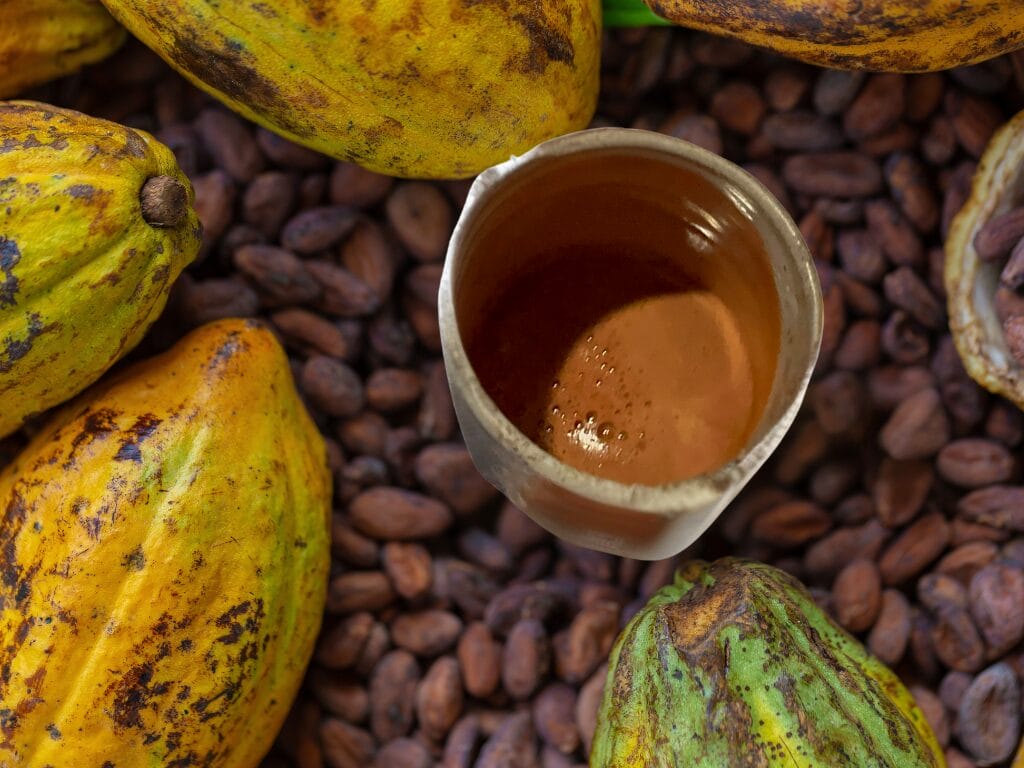
This gorgeous tropical plant grows pods the colour of sunshine and fire—yellows, oranges, reds—and inside are the seeds we turn into chocolate.
So far, so good. But from here, processing makes all the difference.
✨ What’s Cacao?
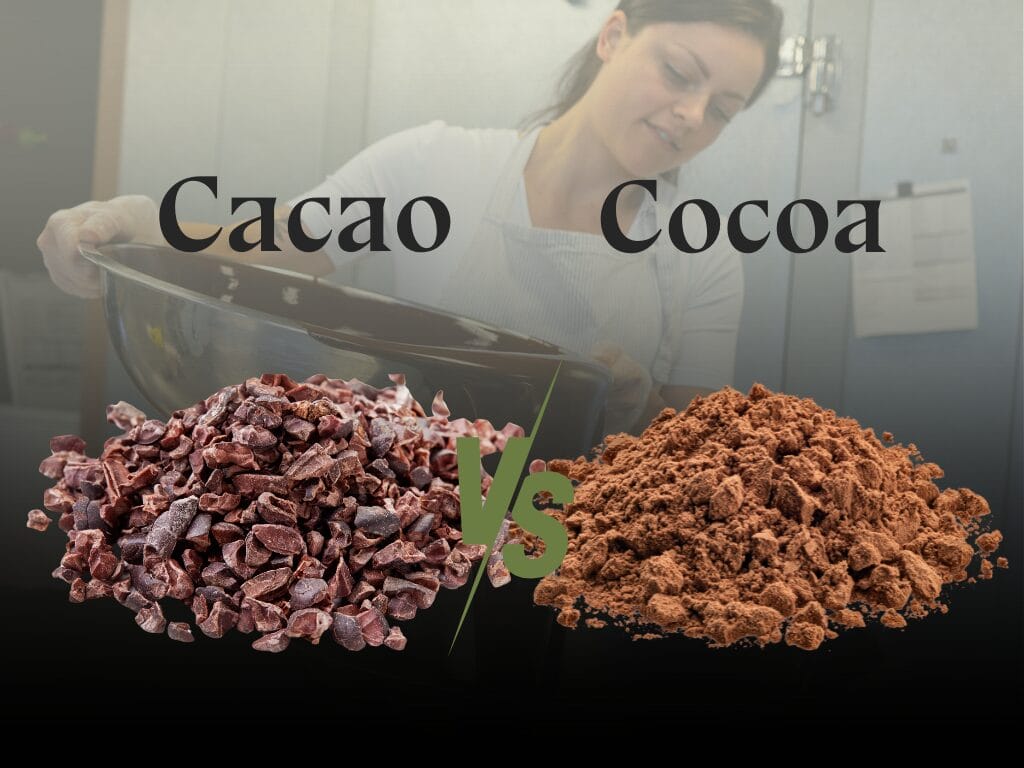
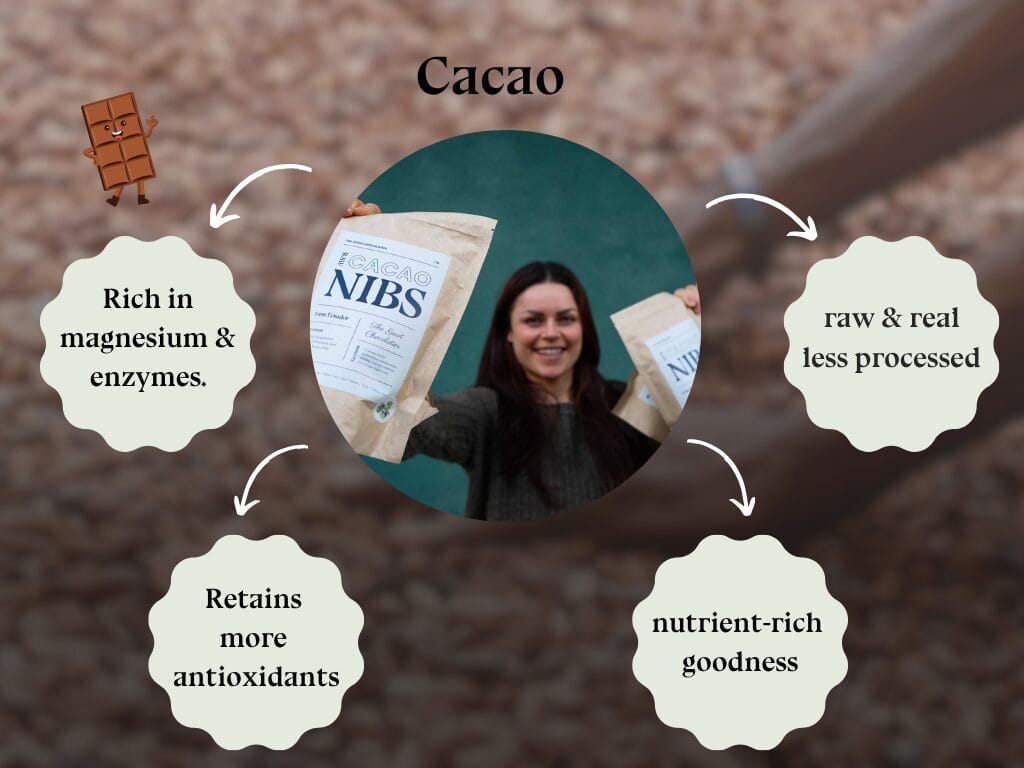
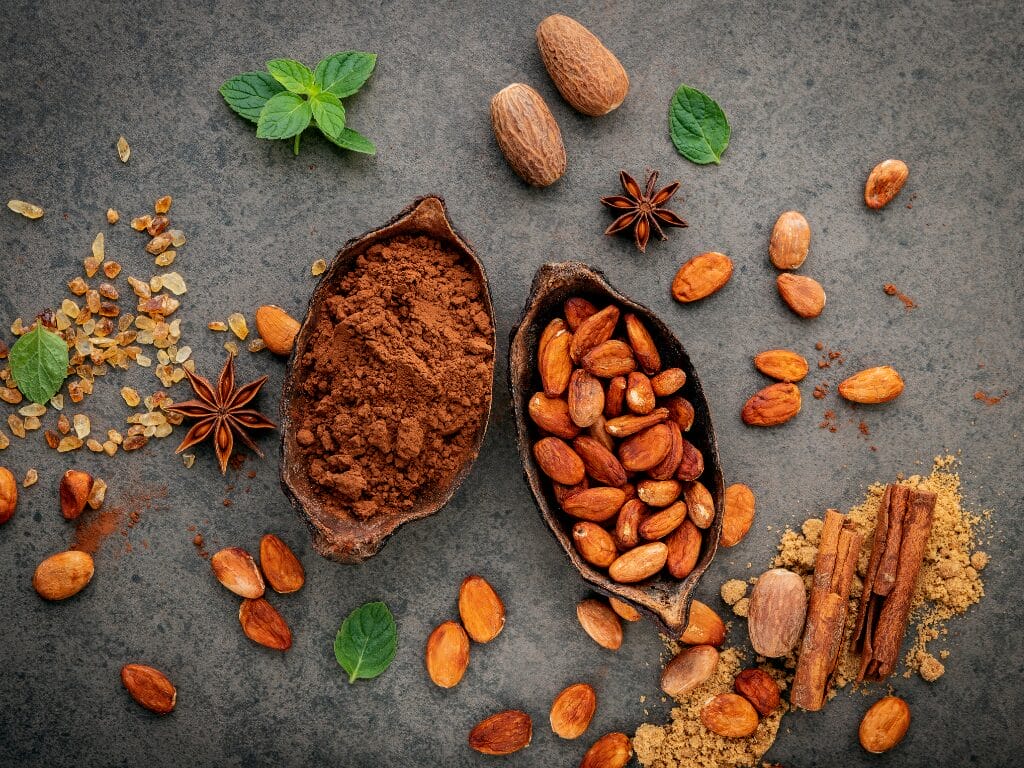
“Cacao” usually refers to beans that are minimally processed.
After being harvested and fermented, these beans are often cold-pressed at low temperatures to separate the cacao solids from the fat (cacao butter), keeping most of the nutrients intact.
You’ll find cacao used in:
- Raw chocolate
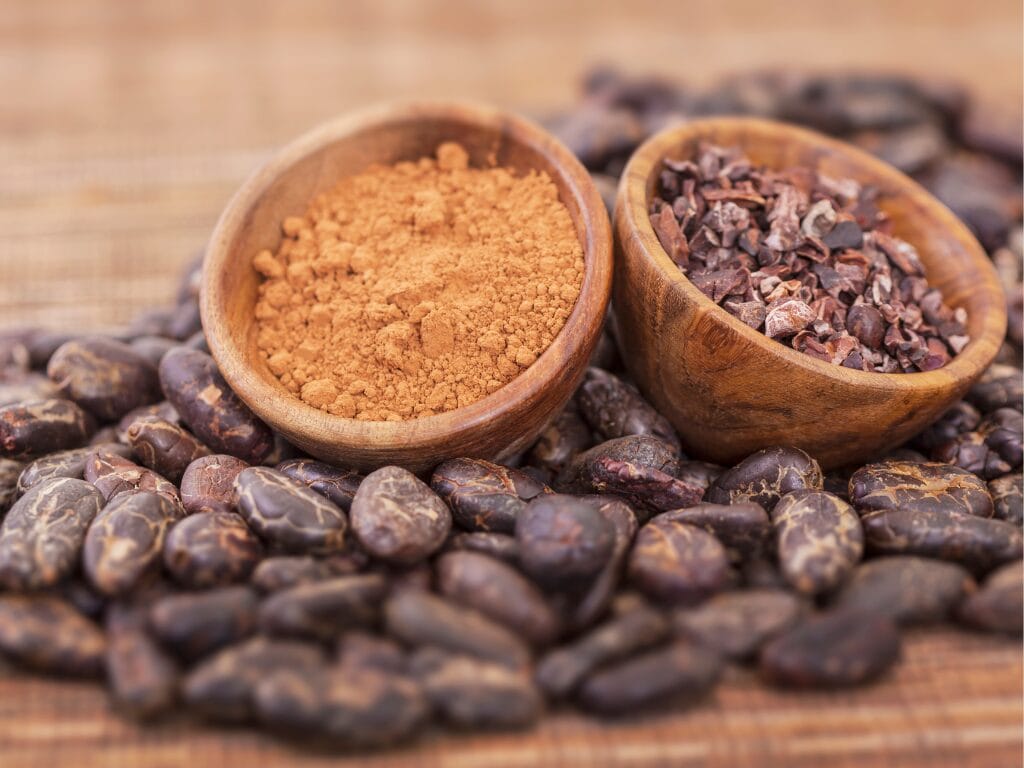
- Cacao powder
- Cacao nibs
- Superfood smoothies and energy snacks
People love cacao because it’s considered more “alive”—it’s bitter, earthy, and complex, and it packs a serious nutritional punch.
🔥 What’s Cocoa?
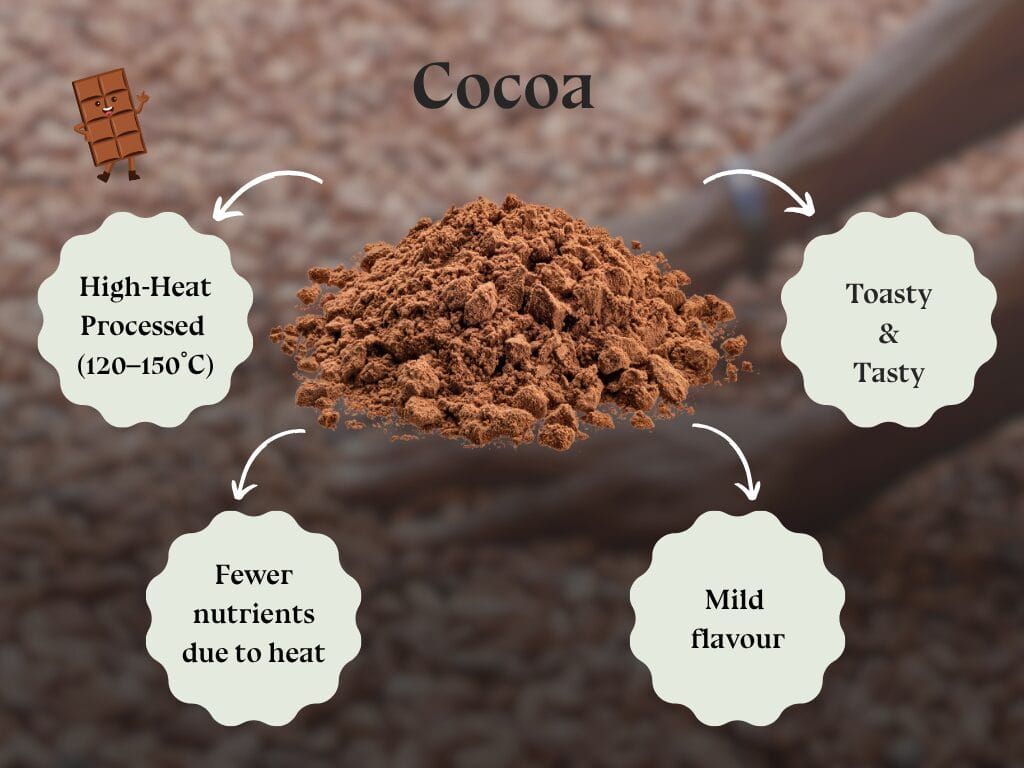
“Cocoa” typically refers to beans that have been roasted at high temperatures—usually around 120°C to 150°C (248°F to 302°F).
Roasting brings out that deep, toasty, familiar chocolate flavour we all know. But it also changes the chemistry of the bean—destroying some antioxidants and altering its natural fats.
It doesn’t mean cocoa is “bad.” It’s just different.
You’ll find cocoa in:
- Hot chocolate mixes
- Most commercial chocolate bars
- Baked goods
- Dutch-processed powders (which are even more heavily processed and less acidic)
🌍 But Hold On—Words Change With Geography
Here’s where things get interesting:
In Africa, where over 70% of the world’s cacao is grown, the word “cocoa” is used across the board—even when they’re referring to raw, unroasted beans.
The same goes in the UK and much of Europe. For many producers, “cocoa” is just the English word. So yes, you might find a high-quality, ethical, single-origin bar labelled with “cocoa,” and it could still be better for you than a so-called “cacao” bar loaded with sugar.
That’s why we say: don’t judge a bar by its label—judge it by its process and ingredients.
💡 Fun Fact:
The name “cacao” comes from the Olmec and Mayan word kakaw. European colonisers misheard and wrote it down as “cocoa”—and the mix-up has stuck around ever since.
🧠 Why Cacao’s Nutritional Profile Is a Big Deal
When chocolate is made with minimally processed cacao, it becomes more than just a treat—it becomes a functional food. That means it’s not just delicious; it’s actually doing something good for your body.
Here’s what cacao naturally contains—and why it matters:
- Magnesium – Known as the “relaxation mineral,” magnesium is essential for over 300 biochemical reactions in your body. It supports muscle recovery, calms the nervous system, helps regulate blood pressure, and promotes better sleep. Many of us are unknowingly deficient, and cacao is one of the richest plant sources out there.
- Iron & Zinc – Cacao contains non-heme iron, which helps carry oxygen in your blood and fight fatigue. Zinc, meanwhile, is your immune system’s best friend, supporting wound healing, hormone balance, and even skin health.
- Flavonoids – These are natural plant compounds with antioxidant powers. In cacao, flavonoids help:
- Improve blood flow
- Reduce inflammation
- Support brain health and memory
Some studies even link cacao flavonoids to improved mood and lower blood pressure. But—these compounds are heat-sensitive, which is why gently processed cacao retains more of them than roasted cocoa.
- Theobromine – A mild stimulant found only in cacao. Unlike caffeine, which spikes and crashes, theobromine gives you a smoother, longer-lasting energy boost—without the jitters. It also opens up blood vessels and helps support focus, endurance, and even respiratory health (fun fact: it was once used to treat asthma).
- PEA & Anandamide – Known as the “bliss molecule” and the “love chemical,” these mood-enhancers are naturally found in cacao. They stimulate the same receptors in your brain as feelings of happiness, love, and connection.
🍫 So yes—there’s science behind that happy sigh you let out after a really good bite of dark chocolate. It’s not just you.
On the flip side, most cocoa powders or processed chocolate bars have been roasted at high heat, often alkalised, and stripped of these beneficial compounds. You’ll still get some of the perks, but not nearly as many—and often, the nutritional value is overshadowed by sugar and dairy.
👀 So… Which One Should You Choose?
It depends on what you’re looking for—and that’s okay!
- If you want a sweet, creamy, nostalgic treat (like your childhood hot cocoa), cocoa-based chocolate might hit the spot.
- But if you want a chocolate that energises, nourishes, and supports your body, cacao is your go-to. Especially when it’s part of a low-sugar, ethically made, and thoughtfully crafted bar—like ours.
The real game-changer? Understanding that the words on the front don’t always tell the full story.
🍃 Whether it says cacao or cocoa, how the chocolate was made matters most. That means: how were the beans processed? Where were they grown? What additives were included? Was the final product sweetened responsibly?
And that leads us to this…
🛒 How to Decode Your Chocolate Label (Without Needing a Science Degree)
Reading a chocolate label is like decoding a love letter from the maker. You just have to know what to look for.
Here’s your cheat sheet:
✔️ 1. Cacao Content
Look for chocolate that’s at least 70% cacao. This means less sugar and more actual chocolate. The higher the percentage, the more cacao solids and cocoa butter—and the stronger the flavour and benefits.
🧠 Think of cacao content like a quality score. A 90% bar has 90% pure cacao ingredients and only 10% sweetener or other additions.
✔️ 2. Ingredient Order
Ingredients are listed by quantity. So if the first ingredient is “sugar”, that’s your red flag. Ideally, it should start with “cacao mass,” “cacao nibs,” or “cacao beans.”
✔️ 3. Watch for “Dutch-Processed” or “Alkalised”
This means the cocoa powder has been treated with an alkalising agent to make it less acidic and more shelf-stable. While it creates a milder flavour and darker colour, it significantly lowers antioxidant content. Skip it if you’re in it for the health perks.
✔️ 4. Look for Ethical Language
Phrases like:
- Single Origin – Means the beans all came from one specific region or farm. Usually indicates better traceability and quality.
- Stone-ground – Refers to a gentler, traditional grinding process that preserves flavour and nutrients.
- Organic cacao – No synthetic pesticides or fertilisers used—good for the planet and your body.
- Bean-to-bar – The maker handled the process from sourcing to packaging—often means better control and transparency.
- Refined sugar-free – Instead, look for natural sweeteners like coconut sugar, maple, or date sugar.
- Dairy-free / Vegan – A good sign for those with intolerances, and often signals more cacao-forward flavour.
🚩 5. Watch Out for Health-Washing
Just because a bar says “cacao” on the front doesn’t mean it’s healthy. Read the rest of the label. Are there ten ingredients? Is there palm oil or soy lecithin? Are there artificial flavours or colourants?
🔍 Healthy chocolate is simple. A few clean ingredients. No junk. A balance between flavour and function.
🍫 A Bar That Tells the Truth—And Tastes Like Summer
Now that you’re fluent in cacao vs cocoa, allow us to introduce you to one of our most unique creations:
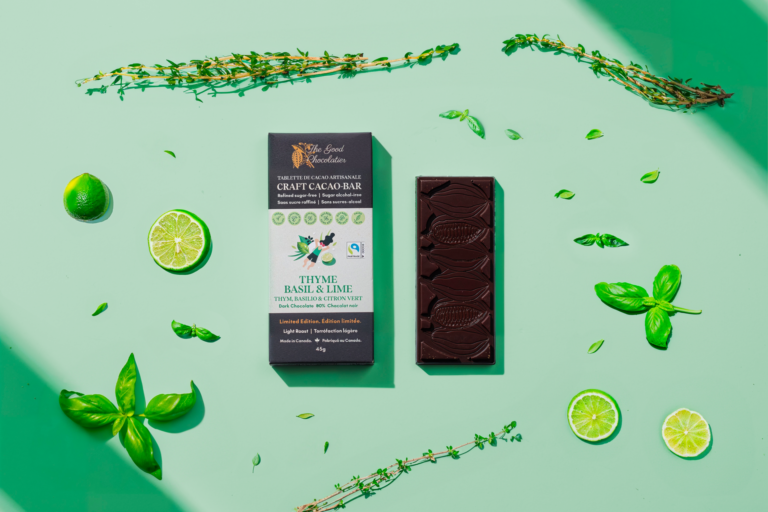
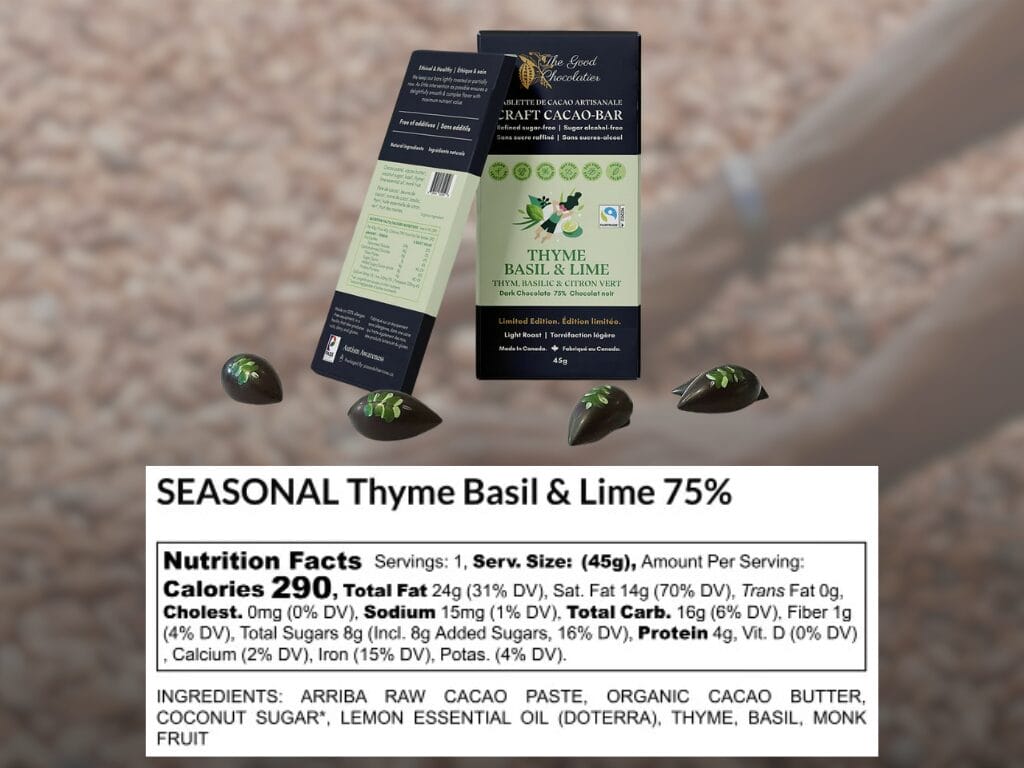
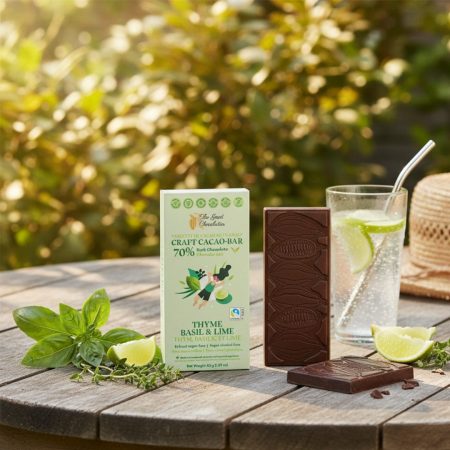
80% Thyme Basil Lime Bar
- Made with organic Peruvian cacao beans
- Infused with real thyme, fragrant basil, and a touch of lime zest
- No dairy. No soy. No refined sugar. Ever.
This isn’t just chocolate—it’s an experience. It’s the bite that says “I care about what I eat, but I still love to indulge.”
✨ Pro tip: Break off a piece after dinner, pair it with a herbal tea or a glass of white wine, and thank yourself for discovering a chocolate bar that actually makes you feel good.
❤️ Final Thoughts: Enjoy!
Yes—there’s a difference between cacao and cocoa.
Yes—your body might thank you for choosing less processed options.
But no—you don’t have to become a chocolate purist or never enjoy hot cocoa again.
At The GOOD Chocolatier, we make chocolate that’s good for your body, your taste buds, and the planet. We use the word cacao because we respect the bean and everything it offers when handled with care. But no matter what you call it—chocolate should always make you feel GOOD.