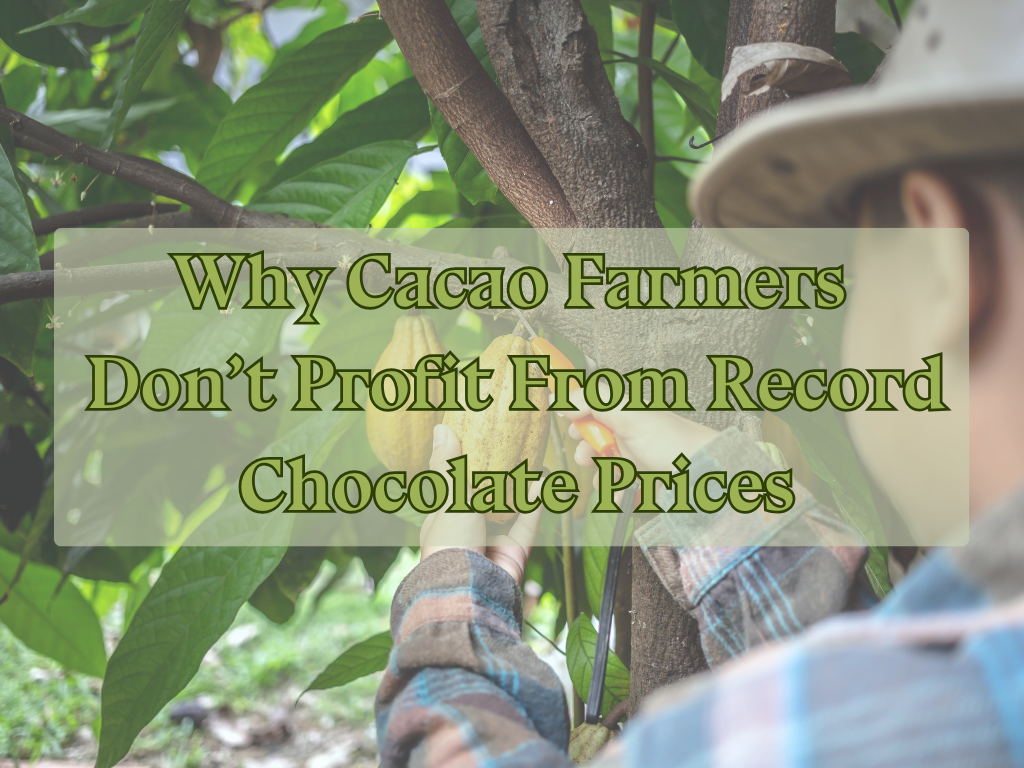
Why Cacao Farmers Don’t Profit From Record Chocolate Prices
And Why Your Choices Still Matter
Chocolate prices are at historic highs.
Across Europe and beyond, consumers are paying more than ever for chocolate. News headlines point to rising cacao prices and strong harvests in West Africa as proof that the system is finally working.
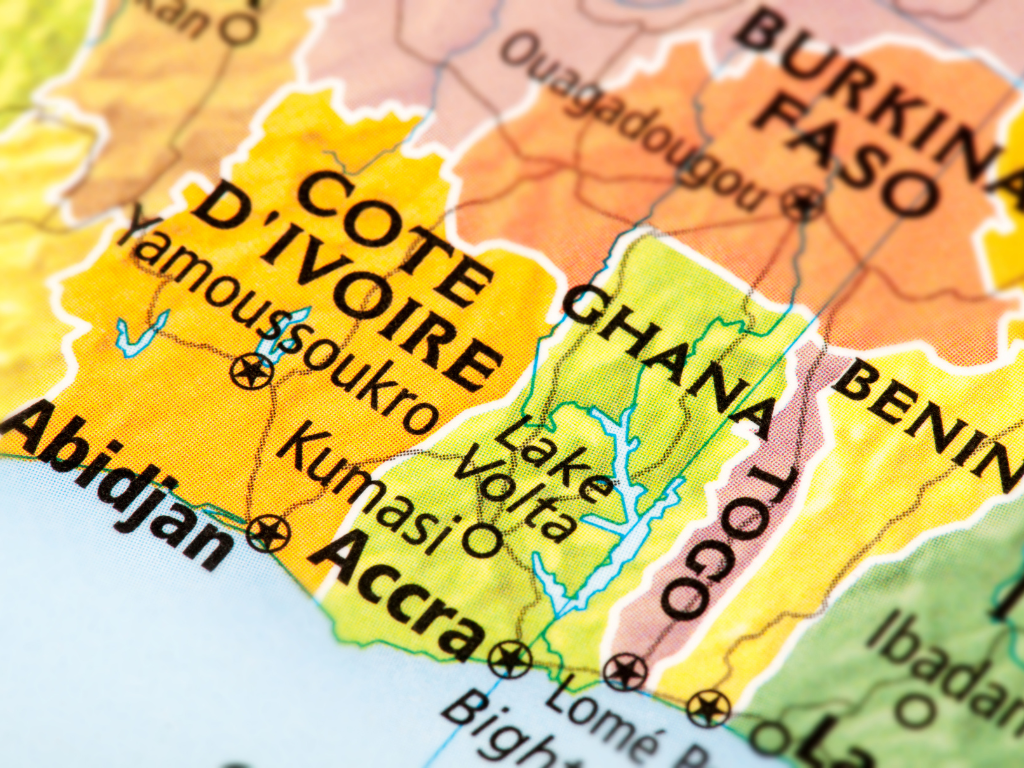
But on the ground, for millions of cacao farmers in Côte d’Ivoire — the world’s largest cacao-producing country — very little has changed.
Higher prices at the checkout do not mean higher incomes for the people who grow cacao. Understanding why requires looking beyond the chocolate bar and into how the global cacao system actually works.
The Core Problem: Value Is Created at the Farm, Captured Elsewhere
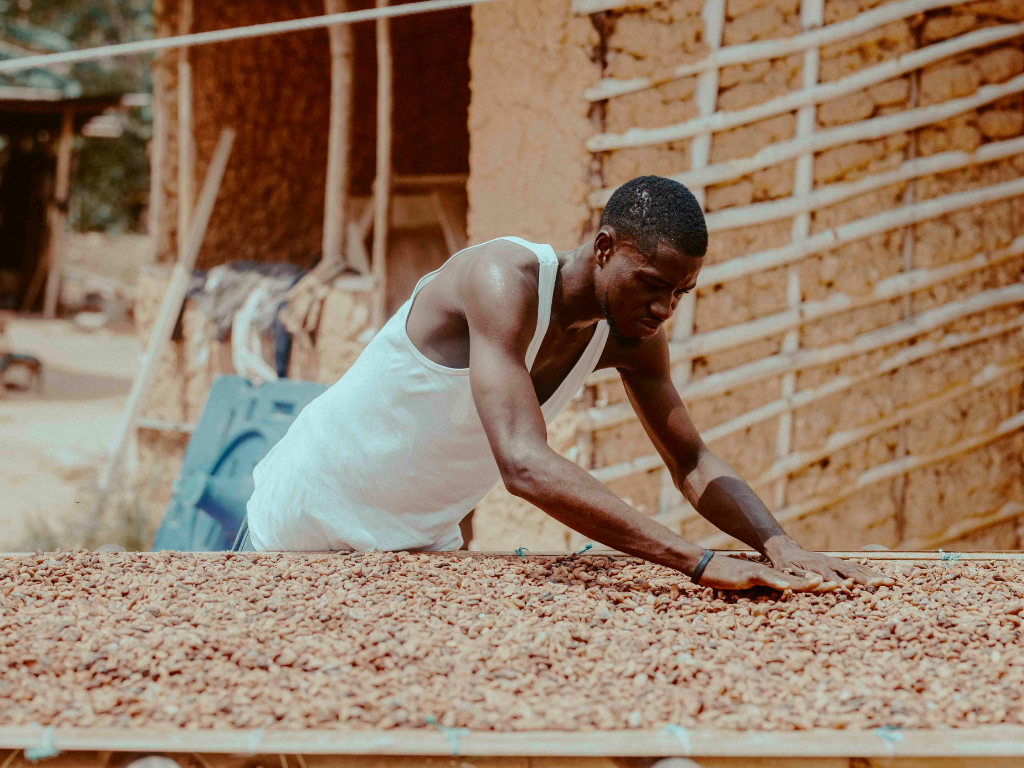
Cacao farmers do the most labor-intensive and risky part of chocolate production:
- They depend on weather patterns increasingly disrupted by climate change
- They face crop disease and unstable yields
- They invest years into trees that take time to mature
Yet farmers earn only a small fraction of the final price of a chocolate bar — often less than 6%.
Why?
Because most of chocolate’s value is added after cacao leaves the farm.
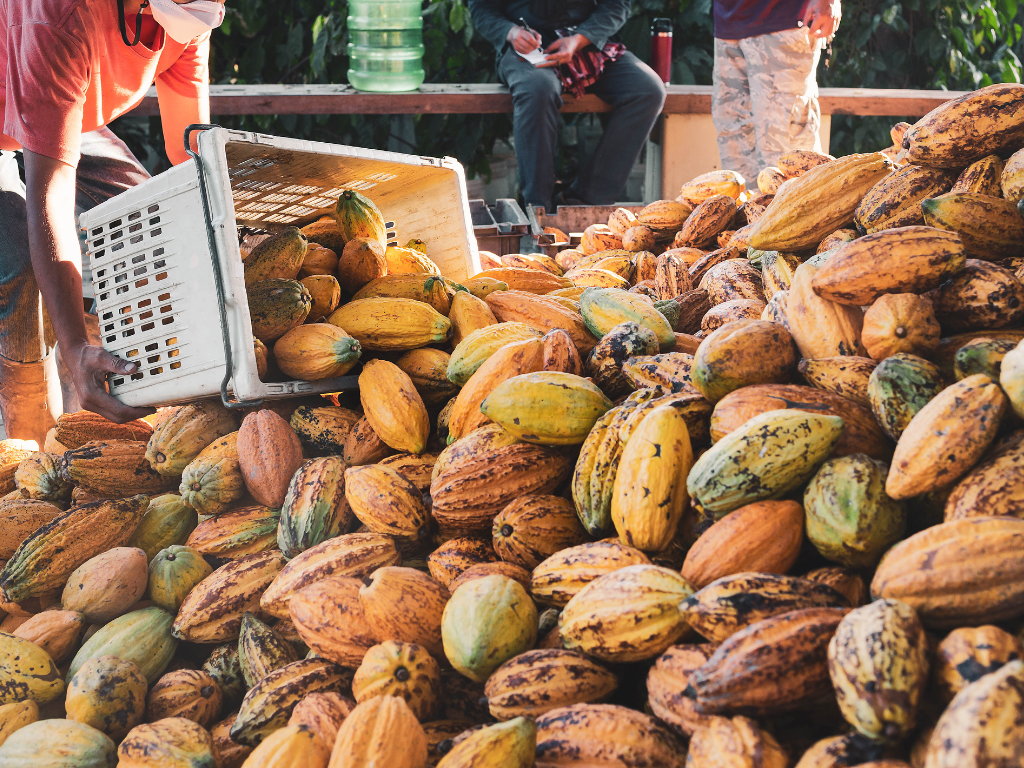
Processing, branding, marketing, distribution, and retail happen far away from cacao-growing regions. These stages generate the highest profits — and farmers are excluded from them.
So even when chocolate prices rise globally, the additional profit is absorbed by:
- Traders
- Processors
- Multinational chocolate companies
- Retailers
Not by the people growing the cacao.
Why Higher Cacao Prices Still Don’t Solve the Problem
In Côte d’Ivoire, the government sets a fixed cacao price to protect farmers from volatile global markets. Recently, this price was raised to a record level, giving hope to many farmers.
But even this increase has limits.
- The price is still disconnected from the final retail value of chocolate
- Rising farming costs eat into gains
- Farmers remain price-takers, not price-setters
In other words, the system allows farmers to survive — not to prosper.
A system where people doing the hardest work can’t build long-term security is not broken by accident. It is broken by design.
The Missing Piece: Local Processing and Ownership
One of the most overlooked reasons farmers don’t profit is this:
Most cacao-producing countries export raw beans and import finished chocolate.
In Côte d’Ivoire, only about 40% of cacao is processed locally. The rest leaves the country before it becomes chocolate.
When cacao is exported raw:
- Jobs are lost
- Skills are not developed locally
- Profits leave the country
When cacao is processed at origin:
- More people are employed
- More value stays within local economies
- Farmers benefit from a stronger ecosystem around cacao
The issue isn’t just price — it’s where value is created and who controls it.
Can One Person Really Make a Difference?
Yes — but not passively.
Change doesn’t come from feeling bad about chocolate. It comes from choosing differently.
One person makes an impact by:
- Supporting brands that pay fairly and transparently
- Asking where cacao is sourced and processed
- Valuing quality and ethics over cheap abundance
- Understanding that “cheap chocolate” always has a hidden cost
Every purchase is a signal. It tells the market what kind of system we accept.

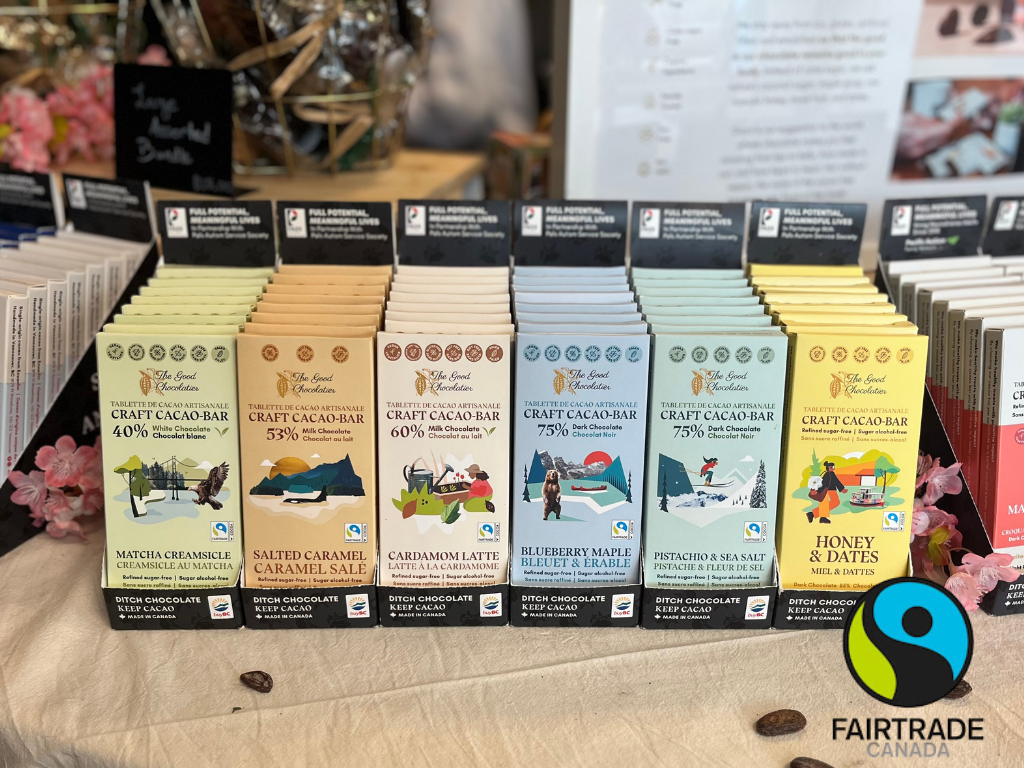
Why The GOOD Chocolatier Exists
At The GOOD Chocolatier, we exist because this system is not inevitable.
Our mission is to help build a chocolate industry where:
- Farmers are paid with dignity
- Value is shared more fairly across the supply chain
- Cacao-producing communities benefit beyond survival
- Transparency replaces exploitation
We believe chocolate should not only taste good — it should do good.
Our vision is a future where Cacao farmers are not invisible, where local economies are strengthened, and where consumers are part of the solution, not separated from it.
The Real Question
Chocolate will continue to get more expensive.
The real question is not whether prices rise — but who those prices serve.
If farmers remain poor while chocolate becomes more profitable, the system has failed.
At The GOOD Chocolatier, we choose to challenge that failure — one bar, one decision, one informed consumer at a time.
Because until cacao farmers truly profit, chocolate cannot truly be GOOD.